Cognitive ability assessments show schools how pupils think, not just what they know. They reveal pupils’ reasoning skills, helping teachers see learning potential, rather than just scores.
Many schools use them to set targets, measure progress, or support admissions decisions.
Here’s a simple guide to what they measure, how they work, and why they matter.
Cognitive assessments like Quest's Cognitive Potential assessments (QCPs) and GL's CAT4:
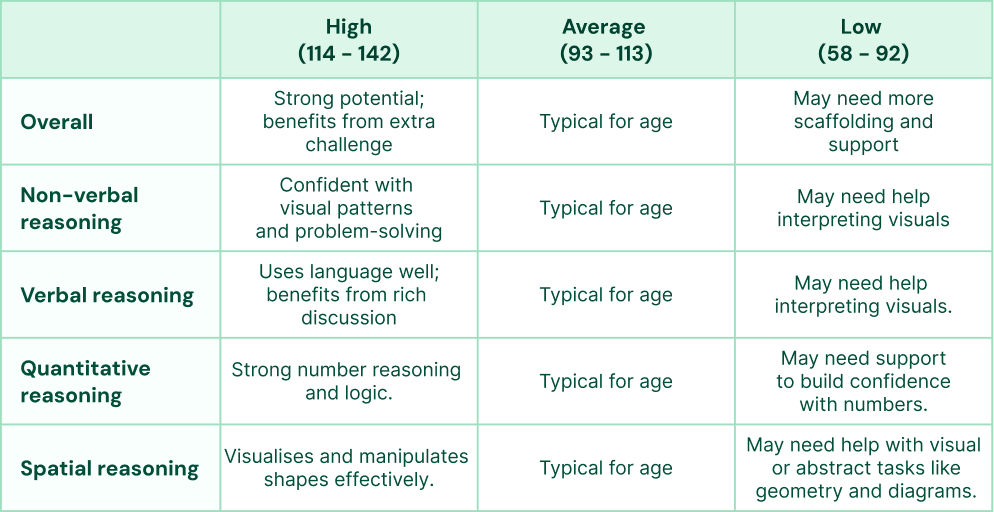
Cognitive Potential assessments check pupils' thinking skills in four main areas: non-verbal reasoning, verbal reasoning, quantitative reasoning, and spatial ability.
Performance in these cognitive areas shows academic potential and reveals pupils’ cognitive profiles.
NVR looks at how well a pupil can find patterns, relationships, and rules in visual information. It shows how well they can think logically and solve problems without using language.
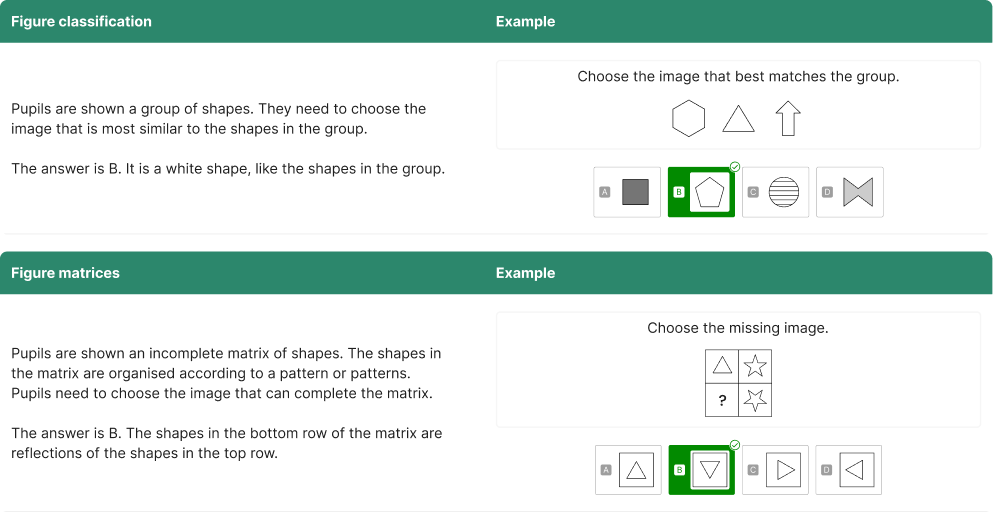
VR measures how well a pupil understands and processes language-based information. It shows how well they can use words and ideas. This helps with reading comprehension and verbal learning.
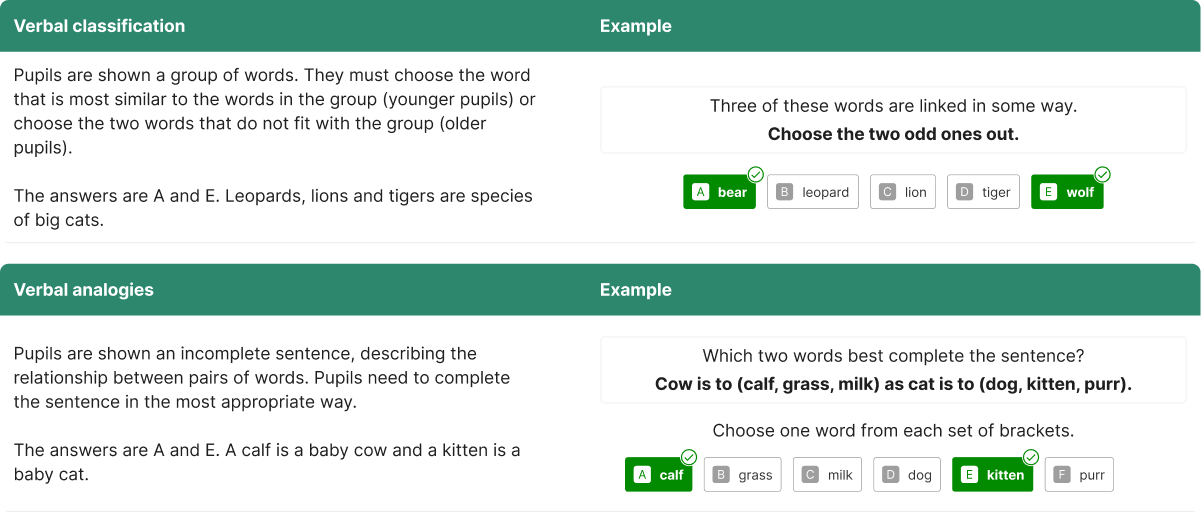
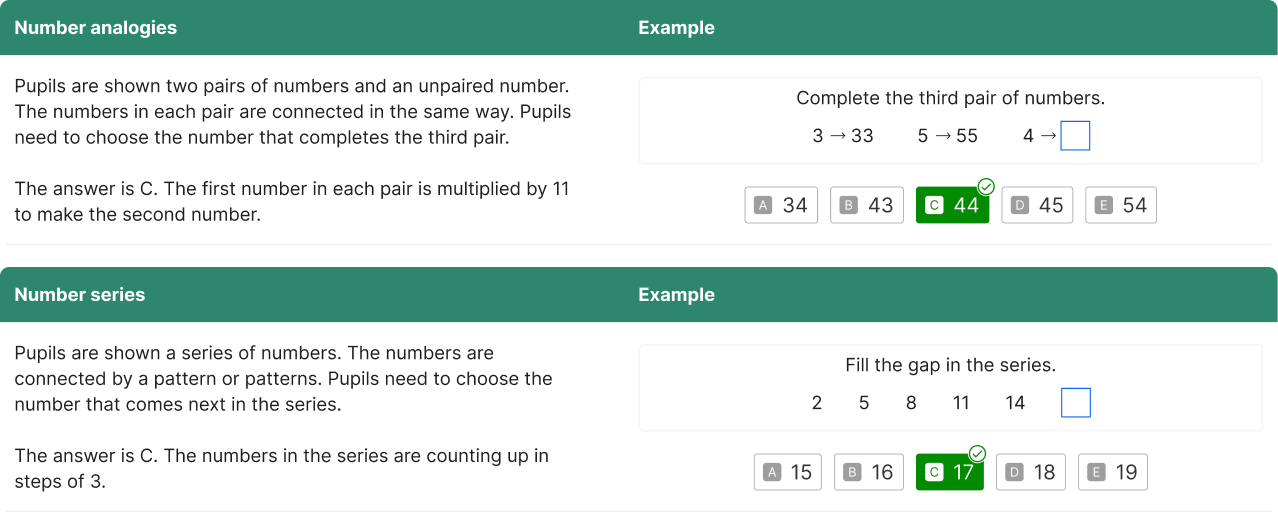
Quantitative reasoning assesses a pupil’s ability to understand and work with numerical patterns and relationships. It highlights how well they can use logic to solve number-based problems.
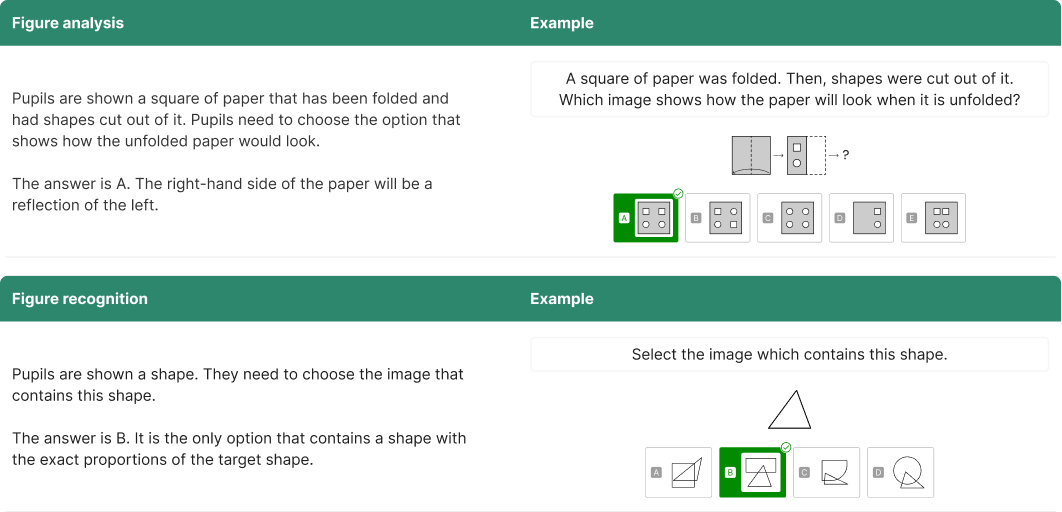
Spatial ability measures how well a pupil can imagine and handle shapes and space in their mind. It plays a key role in subjects like maths, science, design, and computing.
Cognitive assessments use an age-standardised score (SAS) to compare pupils with others of the same age. See our blog to understand age-standardised scores.
Each pupil receives:
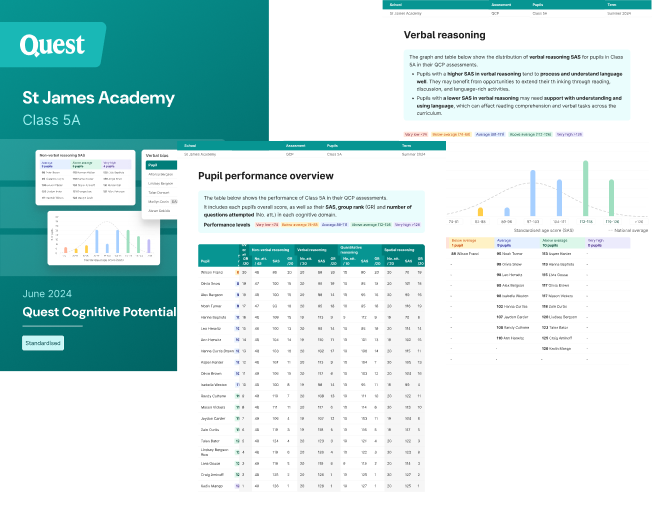
QCP insights help teachers understand each pupil’s unique cognitive profile.
Cognitive Potential reports highlight individual strengths and areas for support, allowing teaching to be tailored to each child’s needs.
Below are examples of how this information can be used to guide personalised teaching for three pupils - Ben, Cara, and Dahlia.
Overall SAS: 105
NVR: 110 Spatial: 107 Verbal reasoning: 115 Quantitative reasoning: 89
Ben’s strong verbal reasoning score shows that he can reason effectively with words. This means he is likely to do well in English and the humanities. These subjects rely on strong writing and speaking skills. His lower quantitative reasoning score suggests he might struggle with some maths topics. He could benefit from focused support in that area.
Overall SAS: 123
NVR: 124 Spatial: 126 Verbal reasoning: 119 Quantitative reasoning: 122
Cara’s consistently high scores in all areas show a strong cognitive profile. She will likely do well in her studies. She may also benefit from extra challenges and enrichment to help her reach her full potential.
Overall SAS: 102
NVR: 111 Spatial: 108 Verbal reasoning: 80 Quantitative reasoning: 109
Dahlia’s scores indicate high-average ability across most areas, suggesting strong underlying potential. Her lower verbal reasoning score, however, may warrant further investigation. With targeted support to develop verbal reasoning skills, Dahlia is likely to make strong progress.
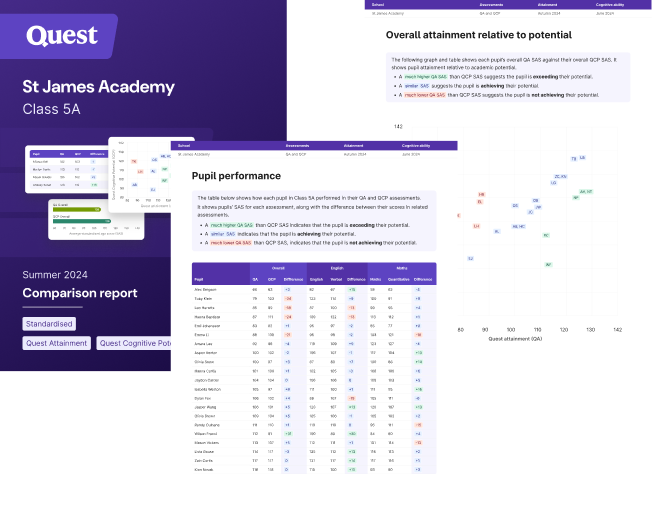
Comparison Reports show how pupils’ attainment compares to their potential. Insights from these reports help teachers to see the value they’re adding to individual pupils and spot any children who might not be achieving their potential.
This helps teachers identify gaps and focus support where needed.
Verbal Reasoning (VR): 115 English Attainment SAS: 112
Quantitative Reasoning: 89 Maths Attainment SAS: 97
Ben’s English skills match his strong verbal reasoning. This shows he is doing well in literacy subjects. His maths attainment, however, sits above his quantitative reasoning potential. This suggests that Ben’s effort, positive learning habits, or effective teaching strategies are helping him make strong progress in maths despite a lower underlying cognitive score in that area.
Verbal Reasoning (VR): 119 English Attainment SAS: 108
Quantitative Reasoning: 122 Maths Attainment SAS: 120
Cara’s cognitive profile indicates very high potential, particularly in quantitative reasoning. Her maths attainment reflects this strength well, sitting almost exactly in line with her potential. In English, however, Cara is currently performing slightly below expectations based on her verbal reasoning score. She is doing well overall, but she could improve her written expression. Challenging herself with more complex texts might help her reach her full potential in English.
Verbal Reasoning (VR): 80 English Attainment SAS: 98
Quantitative Reasoning: 109 Maths Attainment SAS: 107
Dahlia's English score is higher than her verbal reasoning score. This shows she is doing better in literacy subjects than expected based on her cognitive prediction. This highlights strong progress and the positive impact of effort and support strategies. Her maths skills match her ability to reason with numbers. This shows she is reaching her potential in this area.
With Quest’s detailed cognitive reports and comparison reports, teachers can see beyond attainment to understand how pupils think and learn best, demonstrating their true potential.
See how Quest Cognitive Potential Assessments can give you deeper insight into every pupil and show real value added - book a call today


.jpg)